

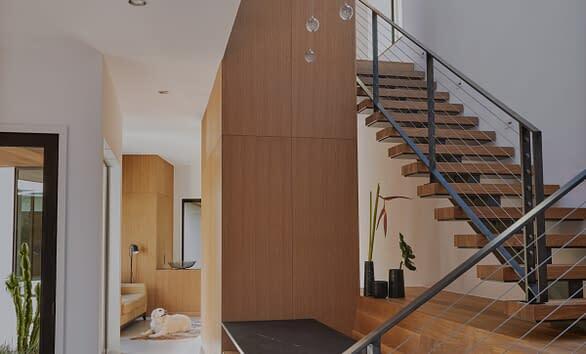
The staircase is one of the most prominent architectural features in any multi-story home, often acting as a central anchor for entryways and living rooms. Yet, because it serves as a primary vertical highway, it also undergoes more concentrated wear, foot impact, and friction per square inch than almost any flat floor in the house.
Updating your staircase involves balancing key factors: structural durability, slip resistance for family safety, sound dampening, and seamless visual harmony with the floors above and below.
Hardwood Stairs: Timeless Beauty with Custom Tread Profiles
Solid wood treads offer an undeniably high-end appearance that can elevate a home's entryway. Hardwood treads are extremely easy to wipe clean and can be stained to match your main-level wood or LVP floors.
The Power of Contrast: A popular interior design trend involves pairing natural wood treads with crisp white-painted or tiled risers. This creates a clean, classic contrast that brightens up dark stairwells and adds a traditional architectural feel.
Bullnose Profiles: The front edge of each tread (the bullnose) takes the brunt of foot traffic. Utilizing solid, precision-milled hardwood noses prevents premature chipping, cracking, or rounded wear spots.
Stair Runners: The Ideal Hybrid Solution
If you love the look of real hardwood stairs but worry about slick surfaces for children or pets—or the loud sound of footsteps echoing through the house—a custom carpet stair runner offers the perfect middle ground.
A runner leaves a few inches of natural wood exposed on either side of the tread while covering the center walking path with a durable, textured carpet. This provides soft cushioning underfoot, exceptional anti-slip traction, and significant sound reduction. Using specialized decorative stair rods in antique brass, brushed nickel, or matte black adds an extra layer of custom elegance to the installation.
Wall-to-Wall Stair Carpet: Maximum Safety and Acoustic Comfort
For homes with bedrooms directly adjacent to the staircase, full wall-to-wall carpeting on the stairs remains a top choice. It provides maximum cushioning, absorbs deep impacts, and thoroughly deadens noise from running steps.
When carpeting stairs, material selection is key. Low-pile, high-twist nylon or wool carpets with dense loop structures work best. Avoid loose, plush shags, as they tend to flatten out over the tread edge and present a tripping hazard. Additionally, installers must use specialized, high-density stair pads that will not collapse under constant heel pressure over time.
Professional Stair Installation: Safety First
Tacking carpet or fitting wood treads on a staircase requires specialized techniques, including precise waterfall or cap-and-band tucking methods. Improperly secured carpet on stairs presents a major safety hazard for your family.
Our professional installation mechanics have decades of experience measuring, cutting, and securing custom stair applications. We ensure every tread is level, every runner is straight, and every carpet edge is firmly anchored. Read about our family’s hands-on approach to home safety and craftsmanship on the Wallett's Flooring about us page.
Ready to transform your staircase into a safe, stunning focal point? Visit our Wallett's Flooring location page to get directions to our retail showroom, speak with our installation experts, and choose the perfect material for your stairs today.


