

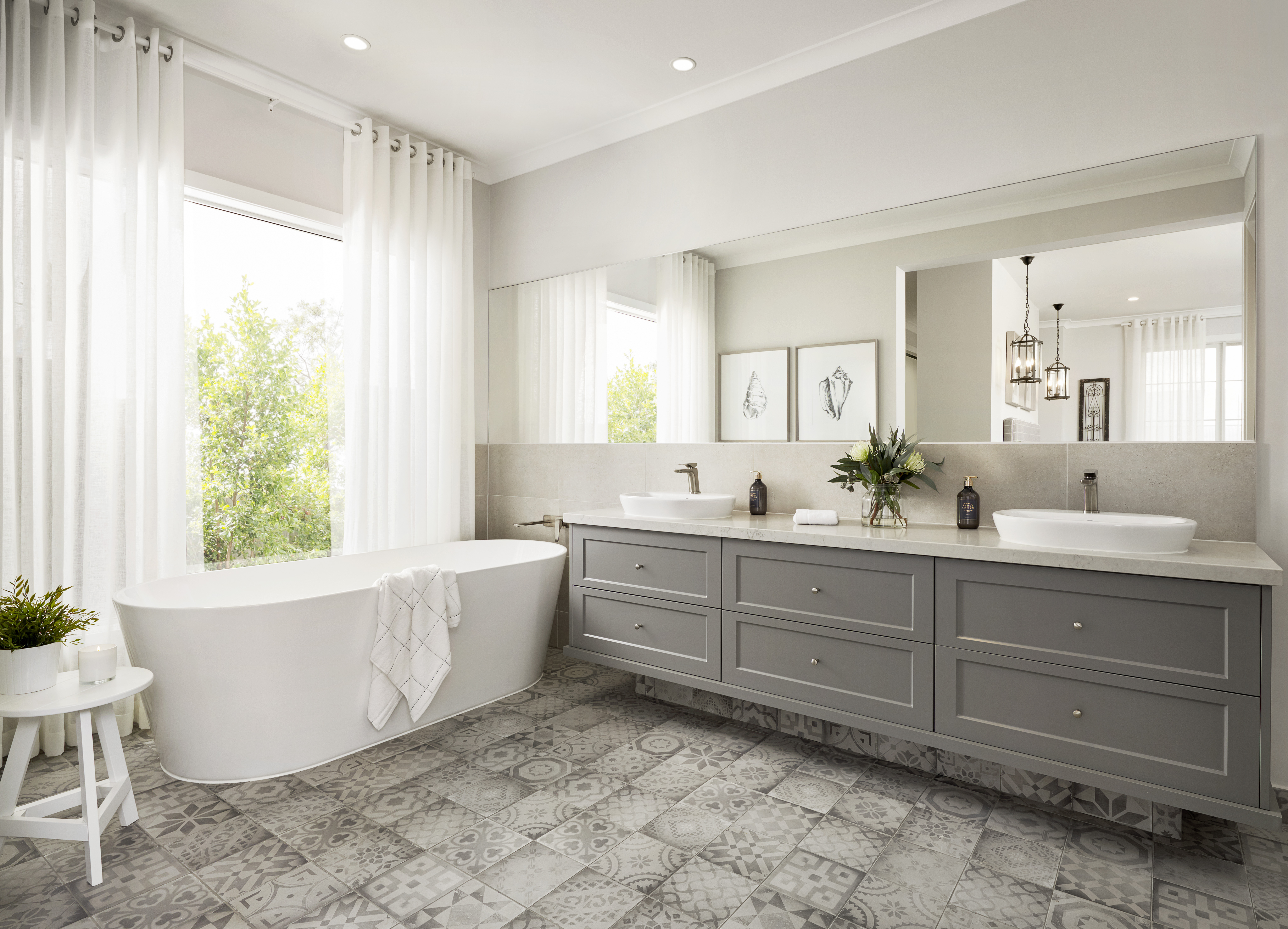
The bathroom has evolved from a strictly utilitarian room into a personal sanctuary—a place to unwind, relax, and escape the stresses of daily life. If you are planning a bathroom renovation, the materials you select for your floors and walls will dictate the entire ambiance of the space. Tile remains the premier choice for luxury bathrooms, offering a perfect marriage of absolute moisture resistance and boundless design flexibility.
From sleek modern wet rooms to classic vintage aesthetics, the right tile arrangement can completely elevate your home's aesthetic. However, navigating the choices between porcelain, ceramic, and glass requires a bit of expert guidance to ensure your design performs beautifully in wet conditions.
Porcelain vs. Ceramic: The Bathroom Moisture Standard
While both options offer stunning visual appeal, understanding their physical characteristics is vital for a bathroom environment.
Porcelain tile is crafted from denser clay and fired at incredibly high temperatures, making it nearly impervious to water with an absorption rate of less than 0.5%. This makes it the absolute gold standard for shower floors, walls, and high-moisture bathroom spaces. Standard ceramic tile, while highly durable and cost-effective, is slightly more porous and is best suited for bathroom accent walls, backsplashes, or light-traffic floor areas. Both materials offer a dense, hard surface that naturally resists wear, chips, and stains, ensuring your bathroom looks brand new for decades.
Large Format Formats and Custom Mosaics
Design trends have leaned heavily toward creating seamless, expansive surfaces. Utilizing large-format porcelain tiles significantly reduces the number of grout lines in your bathroom. Because grout lines are the most labor-intensive parts of a floor to clean, minimizing them creates a sleek, high-end look that is exceptionally easy to maintain.
For custom walk-in showers, smaller mosaic tiles are ideal because they can be cut and adapted to sloping shower floors to ensure proper water drainage. Mixing textures—such as a matte-finished floor tile with a glossy subway tile on the walls—adds subtle depth and sophisticated contrast to the room.
The Technical Demands of Water-Tight Tile Installation
Installing bathroom tile is an exacting science. Because water is constantly present, improper waterproofing beneath the tile can lead to catastrophic subfloor rot and mold growth.
Our professional installation mechanics utilize advanced mud-bed preparation, modern crack-isolation membranes, and specialized waterproof backer boards. We take the time to precisely calculate slopes and layout lines, ensuring a beautiful pattern without awkward tile slivers at the edges.
Our family-owned business treats every installation with an absolute commitment to structural excellence. Check out our Wallett's Flooring about us page to discover our rich history of professional tile mechanics and see how we bring decades of technical mastery to every local bathroom remodel.


